The End of the Meme Era: Where Investor Money Has Moved
This week drew a clear line under one of the key trends of 2026: markets are no longer waiting for cheap money. While the Fed keeps macro conditions on a tight leash, the line between traditional finance and blockchain is disappearing at an alarming speed.
The Fed Holds at 3.75%. The Era of Free Money Is on Pause
The Federal Reserve left rates unchanged, as expected. Despite one dissenting vote in favor of a 25 bps cut, Jerome Powell’s tone remains firmly hawkish.
The starting conditions leave very little room to maneuver: the economy is growing, unemployment is stable, and inflation (PCE) has been revised upward against the backdrop of Middle East geopolitics. The message to markets was as clear as it gets: no one is going to flood the system with liquidity in advance.
In a world of expensive capital, only those assets and sectors with real, organic demand are likely to hold up. The days of rising purely on expectations of rate cuts are fading.
Market Convergence: Nasdaq and Hyperliquid Are Building a Bridge
This week we saw a historic process unfold — CeFi and DeFi moving toward each other.
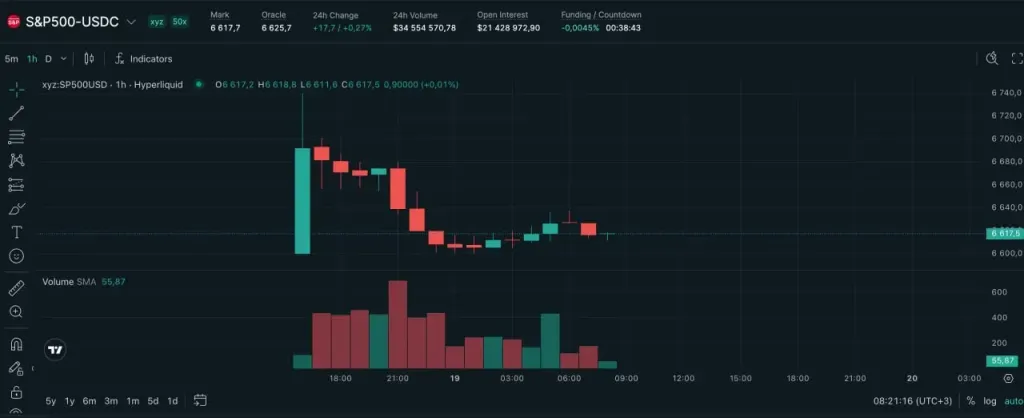
On one side, DeFi is absorbing traditional market indices. The DEX platform Hyperliquid officially launched trading for the S&P 500 index. For traders, that means the old divide between “crypto” and “equities” is starting to break down. You can now gain exposure to the 500 largest U.S. companies without leaving the on-chain environment or converting stablecoins back into fiat.
On the other side, TradFi is adopting blockchain mechanics. The SEC has officially approved trading in tokenized stocks on Nasdaq, including names from the Russell 1000 and ETFs tied to the S&P 500. This is not a symbolic pilot — it is a working model with the same tickers and the same shareholder rights.
Gold Becomes a Service
In line with the broader trend of tokenizing real-world assets, one of the most important stories of the week came from the conservative corner of finance. The World Gold Council launched a framework called Gold as a Service (GaaS).
Its goal is to create a unified standard for scaling tokenized gold across digital financial systems. Until now, the crypto-gold market has been fragmented, with each issuer setting its own rules and backing structure. The WGC stepping in means that humanity’s main defensive asset is now getting institutional rails for seamless movement across both DeFi and banking systems.
Stablecoin Shift: USDC Takes the Lead
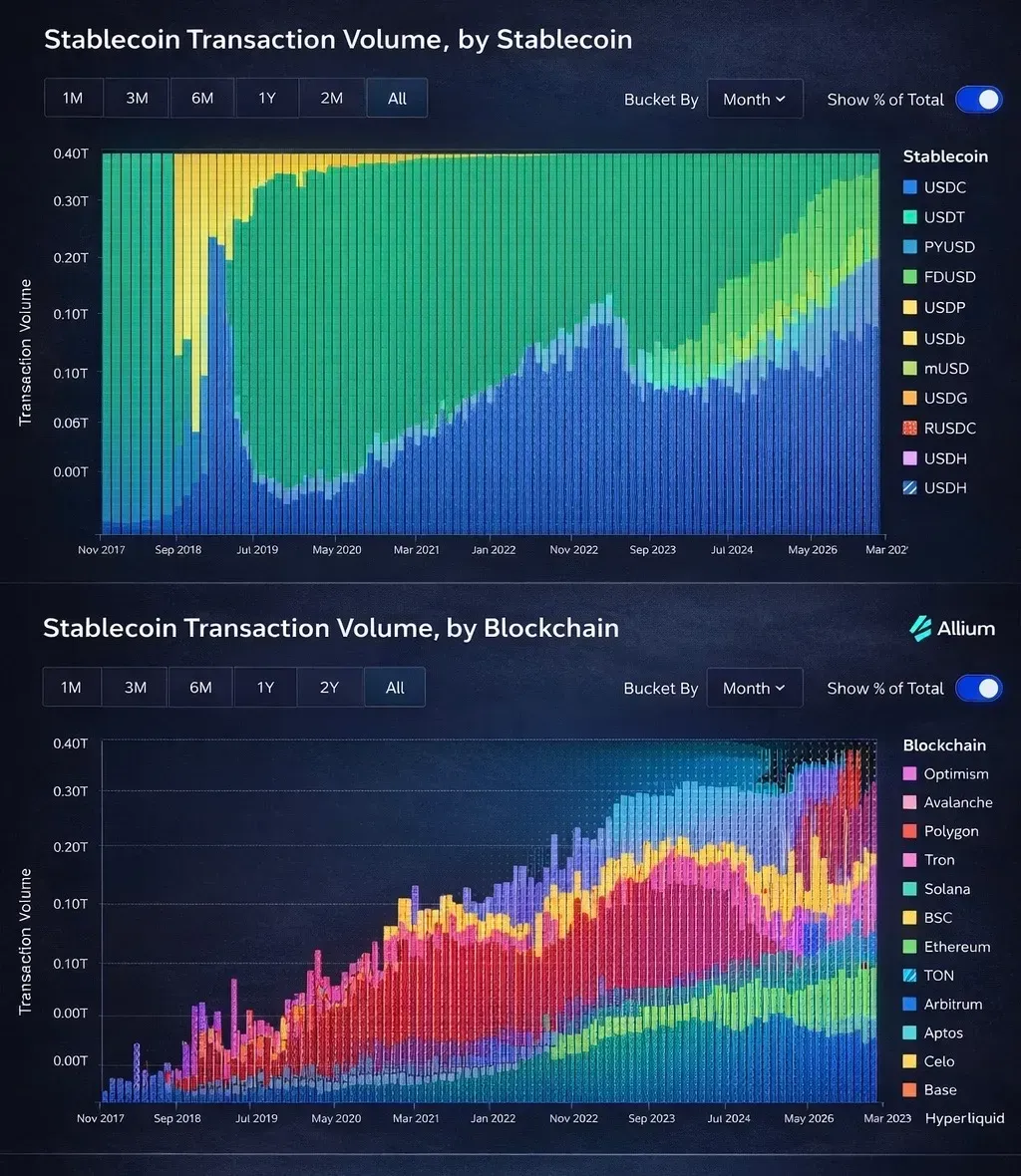
Since the start of 2026, USDC has accounted for more than 50% of all stablecoin transactions, overtaking the long-time leader, USDT.
Historically, USDT dominated offshore and retail trading. USDC moving into first place is a direct sign that institutional capital has arrived — and it wants transparency, audits, and compliance.
At the same time, the network map is shifting too. Ethereum has regained the lead in stablecoin transaction volume, ahead of Solana and TRON. The market is maturing, and capital is increasingly voting for reliability.
The Death of Hype: Meta Buries the Metaverse, Kraken Delays Its IPO
Money is now leaving loud but hollow concepts and moving into real infrastructure.
- Meta is shutting down its metaverse direction. Reality Labs burned through around $80 billion without ever achieving mass adoption. The company is now shifting hard toward AI.
- Kraken has paused its IPO plans. In 2026, investors are no longer buying the simple “crypto exchange” story — they want fundamentals.
What This Means for Investors
This week was sobering. The Fed is not going to provide easy money, which means the days of random outsized gains on empty projects are probably behind us for now.
At the same time, a new financial system is taking shape under the surface: stocks are trading on-chain, stablecoins are serving institutional demand, and capital is flowing almost exclusively into infrastructure that actually works.
Manage risk with discipline.